

A shopper hesitates between two products
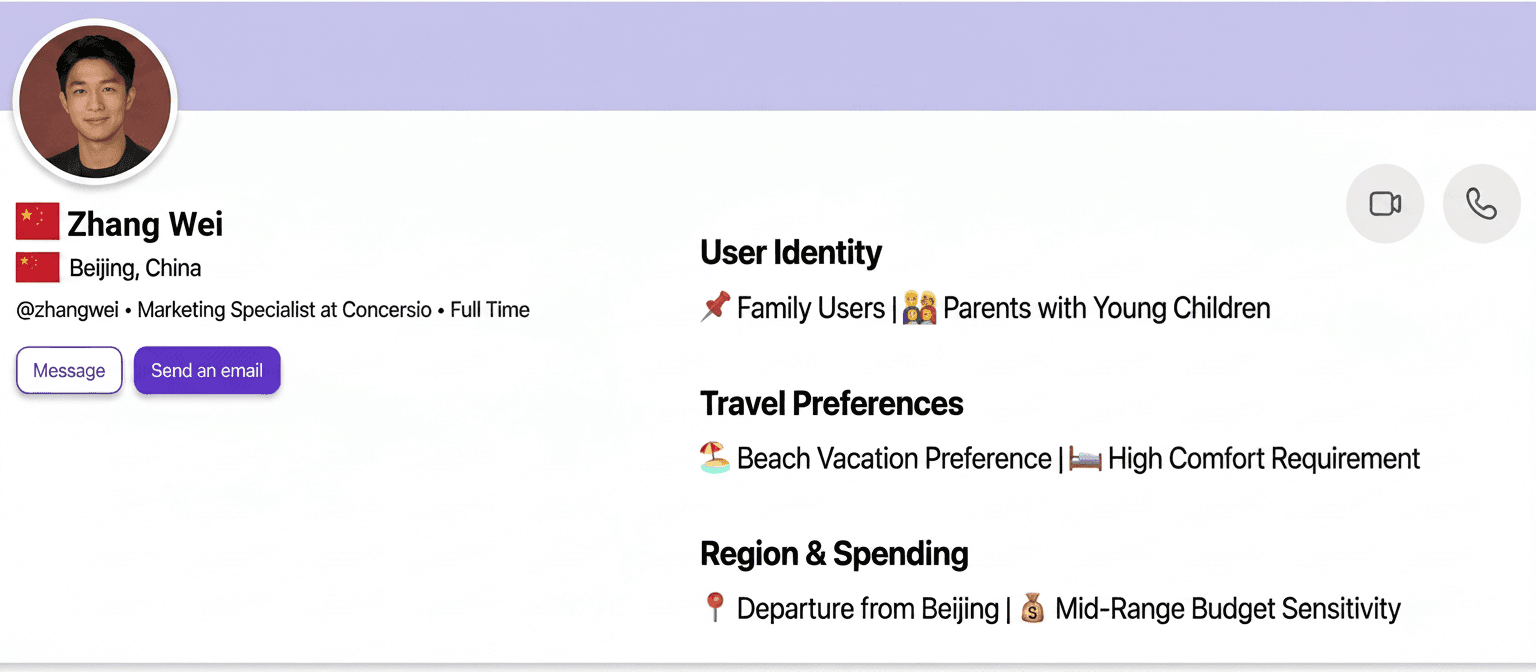
A visitor repeatedly switches between two product pages but does not add either item to the cart.
Home/Compare/Chatty vs Upsello
Chatty combines an AI sales assistant with live chat, FAQs, and a multichannel support inbox — a customer service workspace with AI sales features added.
Upsello is a Shopify-native proactive AI growth agent that reads real-time shopping signals to recommend products, build bundles, trigger offers, and recover carts across the buying journey.
Comparison reviewed September 2026 using publicly available product and pricing information. Features and prices may change.
Step 1
Shopper starts a conversation in web chat or a social channel
Step 2
AI sales assistant answers from the catalog and FAQs
Step 3
Threads continue in the multichannel support inbox
Step 1
Shopper shows hesitation or purchase signals
Step 2
AI identifies the barrier and picks a strategy
Step 3
Recommendation, offer, or recovery action begins
The Quick Answer
Choose Chatty if your priority is a multichannel support inbox with social messaging and a lower entry price.
Choose Upsello if you want AI that acts on purchase intent across the whole buying journey.
The short answer
Both are capable platforms. The right choice depends on what you want the AI to spend most of its time doing.
AI sales assistant + multichannel support inbox
Proactive AI growth agent for selling, support & recovery
Chatty's published pricing lists Basic at $19.99/month and Pro at $68.99/month, with Messenger, Instagram, WhatsApp, FAQ, and helpdesk features across its plans. Sources: Chatty pricing, Chatty Help Center, Chatty on Shopify App Store, Upsello pricing.
At a glance
Both platforms sell and support. The practical difference is what triggers the AI to act. Each cell states the published facts for that platform — the sections below explain the details behind every row.
| Comparison area | Chatty | Upsello |
|---|---|---|
| Core positioning | AI sales agent, live chat and helpdesk | Proactive AI growth agent for selling, support and recovery |
| Primary workflow | Customer conversations and multichannel inbox management | Shopper intent detection and proactive conversion actions |
| Product recommendations | AI recommendations and shopping assistant, with capabilities varying by plan | Behavior-based recommendations, upsell and cross-sell |
| Proactive engagement | Welcome messages, product recommendations, collection and cart boosters depending on plan | Interventions based on shopper behavior, goals and purchase stage |
| Cart recovery | Cart Booster and Cart Reminder available on Pro and Plus | AI cart recovery listed from the Free plan |
| Channels | Email, Messenger, Instagram, WhatsApp and web chat | Storefront chat, with chat, email and SMS recovery on paid plans |
| Brand knowledge | Products, custom answers, websites, files and scenarios | Catalog, policies, brand tone, sales rules and service guidelines |
| Best suited for | Stores prioritizing support inboxes and social messaging | Stores prioritizing proactive conversion and lifecycle recovery |
Sources: Chatty pricing, Chatty Help Center pricing documentation, and the Upsello pricing page.
Buying journey
Feature lists only go so far. These four moments decide whether a Shopify visitor becomes a customer — here is how each platform behaves when they happen.
A visitor repeatedly switches between two product pages but does not add either item to the cart.
A visitor is looking for a complete solution within a specific budget.
The cart is only a small amount below the free-shipping threshold.
Chatty's Cart Booster and Cart Reminder plan restrictions can be verified in Chatty's published plan documentation.
Capabilities
Both platforms cover selling and support. These four capabilities explain most of the real-world difference between them — this section stays focused on them instead of repeating the full feature list.
Chatty publishes welcome messages, AI product recommendations, and collection and cart boosters, with availability varying by plan. These are campaign-style engagement features attached to its chat and inbox.
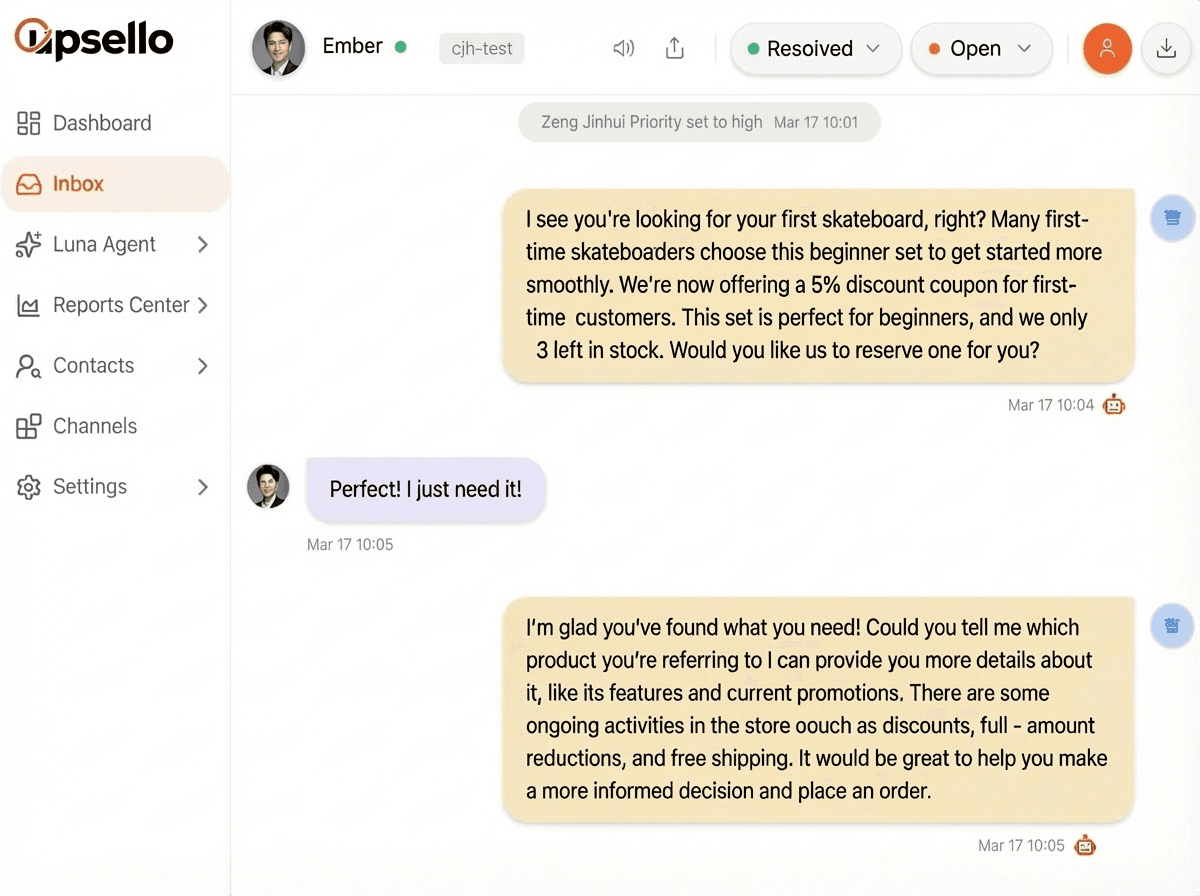
Upsello runs a decision loop on every visitor: it reads browsing, comparison, add-to-cart, and dwell behavior; judges the shopper's current purchase intent; selects the right move — a recommendation, an offer, a bundle, or a recovery nudge; and acts at the moment the signal appears.
The question is not only can the AI initiate contact, but when, why, and with what strategy.

Both platforms train on your store data, but they emphasize different knowledge. Chatty trains on products, custom answers, websites, files, and scenarios.
Your team defines what the AI can say, promise, and discount — and those guardrails hold across every conversation, whether the AI is recommending, offering, or recovering.
Upsello grounds the assistant in your catalog and variants, inventory, pricing, and product relationships, plus return and shipping policies, brand tone, offer boundaries, and explicit rules for when to hand off to a human.

Chatty gates recovery behind its paid tiers: Cart Booster and Cart Reminder unlock on Pro ($68.99/month) and above, according to Chatty's plan documentation.
It intervenes while the shopper is still on the store, selects the strategy based on cart contents and customer context, and extends across chat, email, and SMS on paid plans — with recovered revenue measured in the dashboard, so you can see what recovery earns rather than assume it.
Upsello lists AI cart recovery from the Free plan and treats recovery as a pre-checkout workflow.

Chatty publishes a broader set of social inbox and helpdesk features, routing Messenger, Instagram, WhatsApp, and email conversations through one queue. If your team runs high-volume social support, that unified inbox is a genuine advantage.
Upsello concentrates on the storefront: storefront chat for selling and support, with recovery extended across chat, email, and SMS on paid plans.
It fits merchants whose priority is coordinating selling, support, and recovery around the same customer context, rather than operating a multichannel support desk.

Pricing
List price is only half the story. What matters is which plan unlocks the workflows you need, and how each vendor counts usage.
| Pricing factor | Chatty | Upsello |
|---|---|---|
| Free plan | $0 | $0 |
| Entry paid plan | Basic, $19.99/month | Starter, $39/month |
| Cart recovery availability | Pro, $68.99/month and above | Listed from the Free plan |
| Paid-plan overage | $0.40 per additional AI conversation | Confirm final usage and overage rules before publishing |
| Product knowledge capacity | 200 to 20,000 products across published plans | 200 to 15,000+ knowledge entries across published plans |
| Team access | 1 to unlimited members | 2 to unlimited seats |
Compare usage units, not just allowances. Vendors may define conversations, AI conversations, replies, and automated actions differently. Compare the definition of each usage unit alongside the published allowance before estimating total cost.
How to read this table: if your store generates relatively few AI conversations, Chatty's Basic plan is the cheaper entry point. If you expect steady traffic and want cart recovery without first upgrading to a mid-tier plan, Upsello covers that workflow earlier in its plan structure. Either way, model your expected conversation volume — and each vendor's overage rule — before deciding on list price alone.
Decision guide

Connect your Shopify store, sync your product and policy knowledge, define your sales goals and brand rules, and test Upsello against the buying scenarios that matter most to your business.
Or compare full pricing · See also: Tidio vs Upsello
FAQs
Yes. Both platforms give Shopify stores conversational AI for sales and support, so Upsello can serve the same broad role as Chatty. They differ in focus: Chatty centers on an AI sales assistant with live chat and a multichannel inbox, while Upsello centers on detecting purchase intent and acting on it proactively. Which alternative fits depends on which of those jobs matters more to your store. See how Upsello handles selling, support, and recovery
Both platforms sell and support. The main difference is the trigger. Chatty's AI primarily responds to incoming conversations across web chat and social channels. Upsello's AI watches on-site behavior — browsing, comparison, add-to-cart — and initiates recommendations, offers, and recovery when purchase signals appear. Same storefront job, different starting point.
Chatty has the lower entry price: Basic starts at $19.99 per month, versus $39 per month for Upsello's Starter. The total cost depends on usage. Chatty charges $0.40 for each AI conversation beyond the plan allowance, so active stores should model expected overage before comparing list prices. Compare how each vendor defines a conversation or auto-reply as well, because the units are not identical. Compare full Upsello pricing
Yes. Chatty is not a basic support bot: it publishes welcome messages, AI product recommendations, and collection and cart boosters, with availability varying by plan. Upsello differs in method — its proactive actions are triggered by individual shopper behavior and purchase-stage signals rather than plan-based campaign features.
Cart Booster and Cart Reminder are available on Chatty's Pro plan, $68.99 per month, and above, according to Chatty's published plan documentation. They are not included in the Basic plan.
Yes. Upsello lists AI cart recovery as part of its free plan. Recovery expands across chat, email, and SMS on paid plans, so the workflow grows with the plan structure rather than unlocking at a mid tier.
It depends on where the recommendation happens. For recommendations inside a social or support conversation, Chatty's shopping assistant handles sizing, compatibility, and product matching. For recommendations triggered by on-site behavior — cross-sell, upsell, and bundle suggestions tied to what the shopper is doing right now — Upsello's behavior-based engine is the more specialized fit.
Yes. Upsello is designed to complement your existing inbox, email, and SMS workflows: the AI handles repetitive questions and automated recovery while complex cases move to your human team. Review current capabilities on the Features page , or talk to us about your stack .
If growth means more social conversations and support volume, Chatty's multichannel inbox is built for that workflow. If growth means higher conversion, larger order values, and recovered carts, Upsello coordinates selling, support, and recovery around the same customer context — usually the lever growing stores need most.
We use cookies
We use essential cookies and optional analytics cookies to improve your experience and understand site usage. Learn more in our Cookie policy